Why are some people seemingly using 40 times and top end speed to talk about aspects of the RB position that have to do with explosion? A guy being quick and explosive and being able to hit holes hard has little to do with how fast he can run a 40 yard dash. It has more to do with lateral agility as well as things like vertical or broad jump, 10 yard splits, etc.
Yeah, article below quoting RB coaches including our own. Interesting Lynn talking about that. it's hard to quantify instincts but I get the point. Playing high school sports in my own amateur way of course, at times I just go on automatic pilot and let my skills take over for better or worse.
The getting yards point in that article - stresses "consistency" and getting yards "beyond what the line created." This is my beef with Robinson. It's not like he never does it. But he doesn't do it enough. I think as an athlete Robinson is more than fine. I think if anything that's his niche. He's a big dude and runs plenty fast for his size. But I think he's more of a dude that depends on the O line too much for my liking versus a dude who creates. And as an athlete he lacks explosion-lateral quickness. You can lack speed ala Bucky Irving yet have plenty of lateral quickness.
Instincts
Lynn is quick to differentiate between ballcarrier vision—understanding what is going on in front of the runner—and “instinct,” which is knowing where to go.
“Coaches coach the vision,” Lynn says. “The vision’s gonna be good, but once you get the vision right, their instincts kick in. You don’t coach that. Some guys just have that.”
One of the first players Lynn brought up is Le’Veon Bell. Bell is often described as the most patient back in the league, and with good reason. In a league where
Super Bowls are won in two seconds or less, Bell can wait an eternity before committing to a lane:
...Burst
If instinct is sensing the right place to go, burst—or acceleration, explosion, whatever you want to call it—is the ability to get there. For all of the emphasis on 40-yard dash times, the true measure of speed for NFL running backs is how quickly they can reach an opening before it closes.
”The Chiefs backfield—they’ve got a lot of burst. [Kareem] Hunt has a good burst to him,” says Chargers running back Austin Ekeler. “He’s a bigger back but he still has got some speed, and [Tyreek] Hill has got a
lot of burst in him.”
Hunt gets to the hole quickly for a 5-foot-11 back that weighs 216 pounds:
...Elusiveness
Juke, spin, stiff-arm, stutter step, truck, hurdle—there are a lot of ways to evade tackles, and every back needs to make defenders miss. While running backs are expected to win one-on-one matchups in the open field, being elusive in traffic is key.
“I’ve had guys run the inside-zone course, the aiming point where they’re headed may be clogged, and they would physically run into the back of the linemen and kind of bounce to that spot,” Peete says. “A good, more agile, athletic back would naturally slide, as you’d say ‘cut’ to that position and get to that hole without bouncing or touching anyone.”
Look no further than Hunt.
Peete also points to New Orleans’s Alvin Kamara as a back whose body control and balance allow him to shed and shirk defenders in the open field.
“[Some players] ... can move the pile, accelerate and push things for 3 or 4 yards, or if they get hit, always move for a yard ahead,” Peete says. “Then there’s guys that have unbelievable balance, and they get hit and don’t necessarily fall down, kind of stumble for another 2 or 3.”
...“Get Yards”
When asked about the traits that make a great running back, one immediately rises above the rest in Peete’s mind.
“The most important thing—this is what I’ve been told by many guys over the years—is when you turn on the film, and you watch a guy run, does he gain yards?” Peete says. I started laughing, but he was dead serious.
“You laugh, but that’s the first thing I do when I start studying a college back,” he continues. “I don’t watch a highlight tape. I watch the game and I want to see: Does he gain yards as they hand him the ball?”
It’s a hilariously simple but excellent point. Consistently getting chunks of yardage, especially beyond what the line created, is what it’s all about. The closest statistic for this concept is Football Outsiders’
success rate, which attempts to measure a running back’s consistency in gaining yards while factoring in the down and distance (for example, 2 yards on third-and-2 is a successful run, while 2 yards on first-and-10 isn’t.)
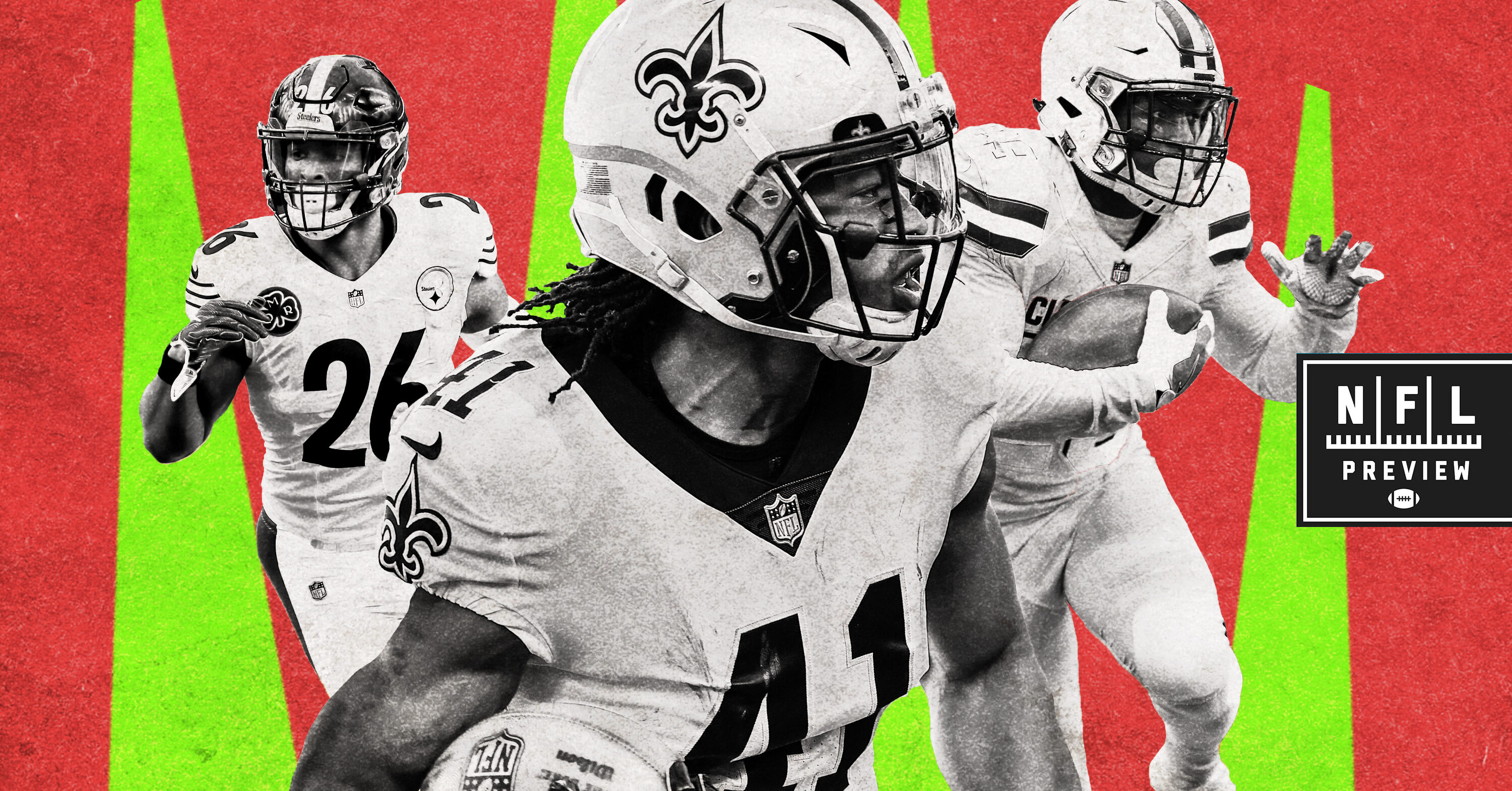
Being an NFL rusher is about more than just running fast. These are the most important skills they need to be successful.
www.theringer.com

 }})