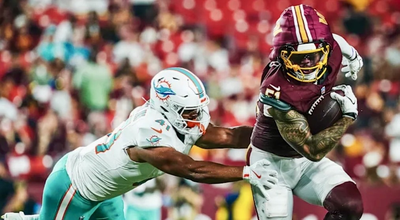
Although there's still plenty of time between now and the NFL draft, the football world appears to have come to a consensus on one Robert Griffin III. Somebody is going to make a deal with the St. Louis Rams to trade up for the second overall pick in order to grab RG3. Nothing is written in stone before the Scouting Combine and Pro Days are completed, but the tablets are currently being prepared for inscription.
If that's the case, it leaves us with an exciting amount of wild speculation to put together. About a dozen teams could logically express some level of interest in acquiring Griffin, which should sound like hosannas ringing in the ears of Rams fans. The second pick could return a serious haul for a St. Louis franchise that hasn't had a winning record since 2003. How serious? Well, that's up for debate, along with a number of other topics, like this one:
Is it wise to invest in second best?
As impressive as RG3's Heisman-winning season was, it's almost impossible to figure that he'll surpass Andrew Luck and end up as the first selection of the Indianapolis Colts. That leaves him as, quite possibly, both the second-best player and the second-best quarterback on consensus draft boards. While other quarterbacks (notably Texas A&M passer Ryan Tannehill) might end up landing somewhere in the first round, there's a pretty big chasm between Luck, Griffin, and the rest of the signal callers in this year's draft class.
Of course, scouting and drafting is an inexact science, so the huge differences perceived by teams and fans on draft day don't always play out that way once the professional careers start. And when teams have had to choose between two viable top picks at quarterback, the one that goes second has usually been a disappointment.1 There have been four drafts since 1990 where quarterbacks were chosen with the first overall pick and then with one (or both) of the subsequent two picks. Those picks have not worked out very well.

 }})